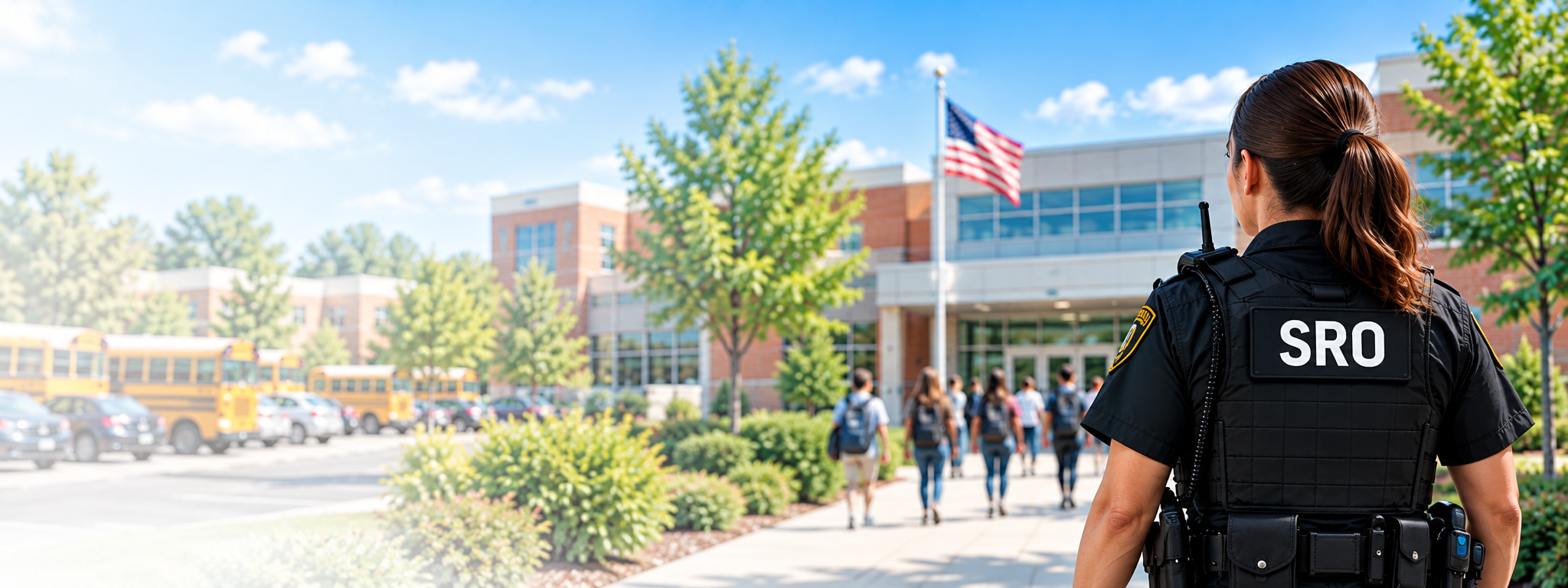
School Resource Officers (SROs) occupy a unique position within America’s schools. They are trained law enforcement professionals working inside an educational environment, where protecting a campus also requires building relationships, collaborating with educators, and preparing alongside the people who will be called upon when an emergency occurs.
The National Association of School Resource Officers (NASRO) describes the School Resource Officer through three interconnected roles: law enforcement officer, educator, and informal counselor or mentor. In practice, those responsibilities can place an SRO alongside administrators reviewing emergency procedures, working with educators and counselors, participating in drills, helping resolve conflicts, and maintaining the daily presence that allows relationships with students and staff to develop.
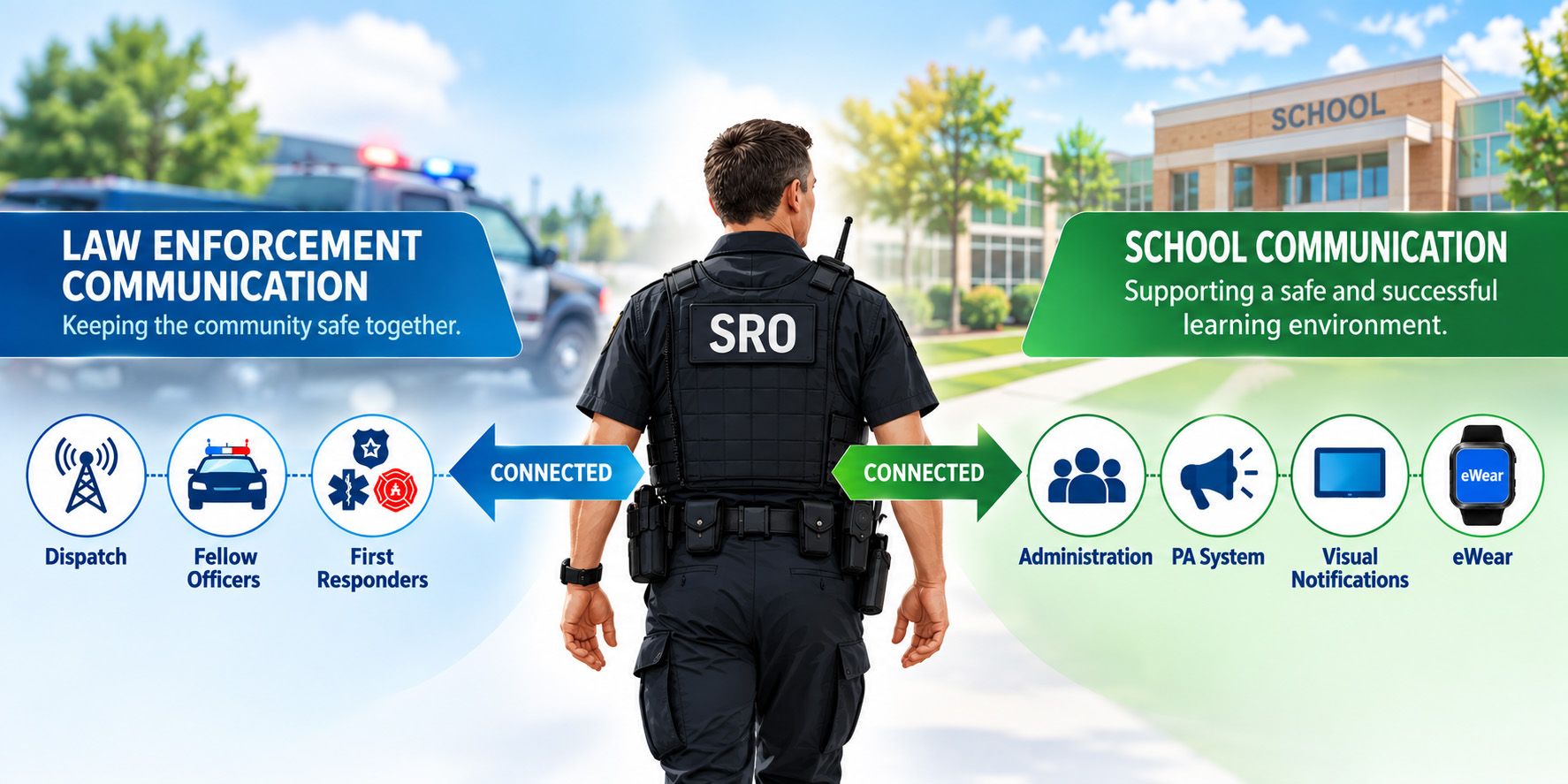
The role also places the SRO in an unusual operational position. An officer serves the school community while remaining connected to a larger public-safety network. The SRO may need to communicate with administrators and school personnel in one moment and dispatch, fellow officers, or other first responders in the next. And unlike personnel whose responsibilities keep them near a classroom, office, or other fixed location, an SRO may be moving throughout the campus when that information is needed most.
Communication Across a Moving Campus
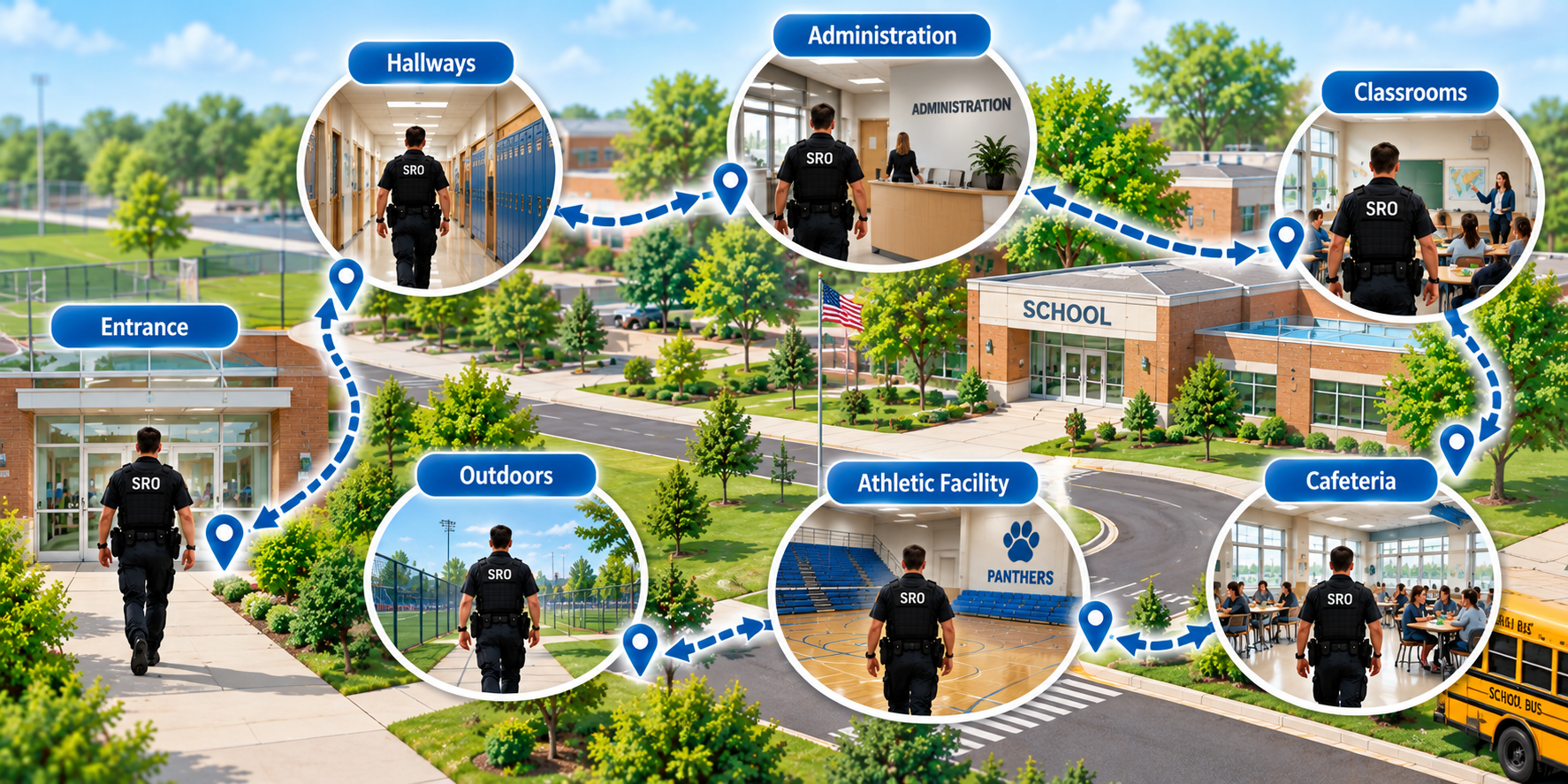
An SRO may begin the morning near a school entrance, move through classroom corridors, meet with administrators, spend time in a cafeteria or athletic facility, and respond to situations elsewhere on campus. That mobility is fundamental to the job, but it can also expose a basic communication challenge.
Academic Research Highlight
A 2018 Lindenwood University dissertation examining school preparedness for multi-hazard events provides a revealing example. Researcher Jennifer Renae Wheeler Lofton interviewed nine Missouri School Resource Officers and nine superintendents about their perceptions of district preparedness. When participants were asked about emergency communication, one SRO described his capabilities as “extremely subpar.” He explained that he carried one radio connected to the sheriff’s department and another completely separate radio connected to school administration.
The study was qualitative and limited to those 18 Missouri participants, so the experience should not be read as representative of every SRO or school district. But the example provides a clear picture of the position an SRO can occupy: connected to law enforcement on one side and the school on another, with important information potentially originating from either environment.
Similar communication arrangements have existed elsewhere. In Florida, Hernando County school-safety officials described SROs carrying one radio for the sheriff’s office and another for the school system because the two systems did not communicate with each other. Charlottesville City Schools has likewise described on-site safety personnel carrying both school and first-responder radios to remain integrated with both communities and their respective protocols.
Extending School Communication Beyond the PA Speaker
Public-address systems remain central to how schools communicate. Routine announcements and emergency instructions can move quickly across a facility, while radios, phones, visual notifications, and mass-notification technologies provide additional ways to reach people in different locations.
Yet an SRO’s responsibilities rarely keep the officer within one communication point. The officer may be outdoors, inside an athletic facility, moving between buildings, or already responding to another situation when information is issued elsewhere on campus. A message can be delivered through the school’s PA system and still depend on the intended recipient being in a position to hear it.
This is where wearable communication can extend the school’s reach without asking the SRO to abandon the law-enforcement communications already essential to the job.
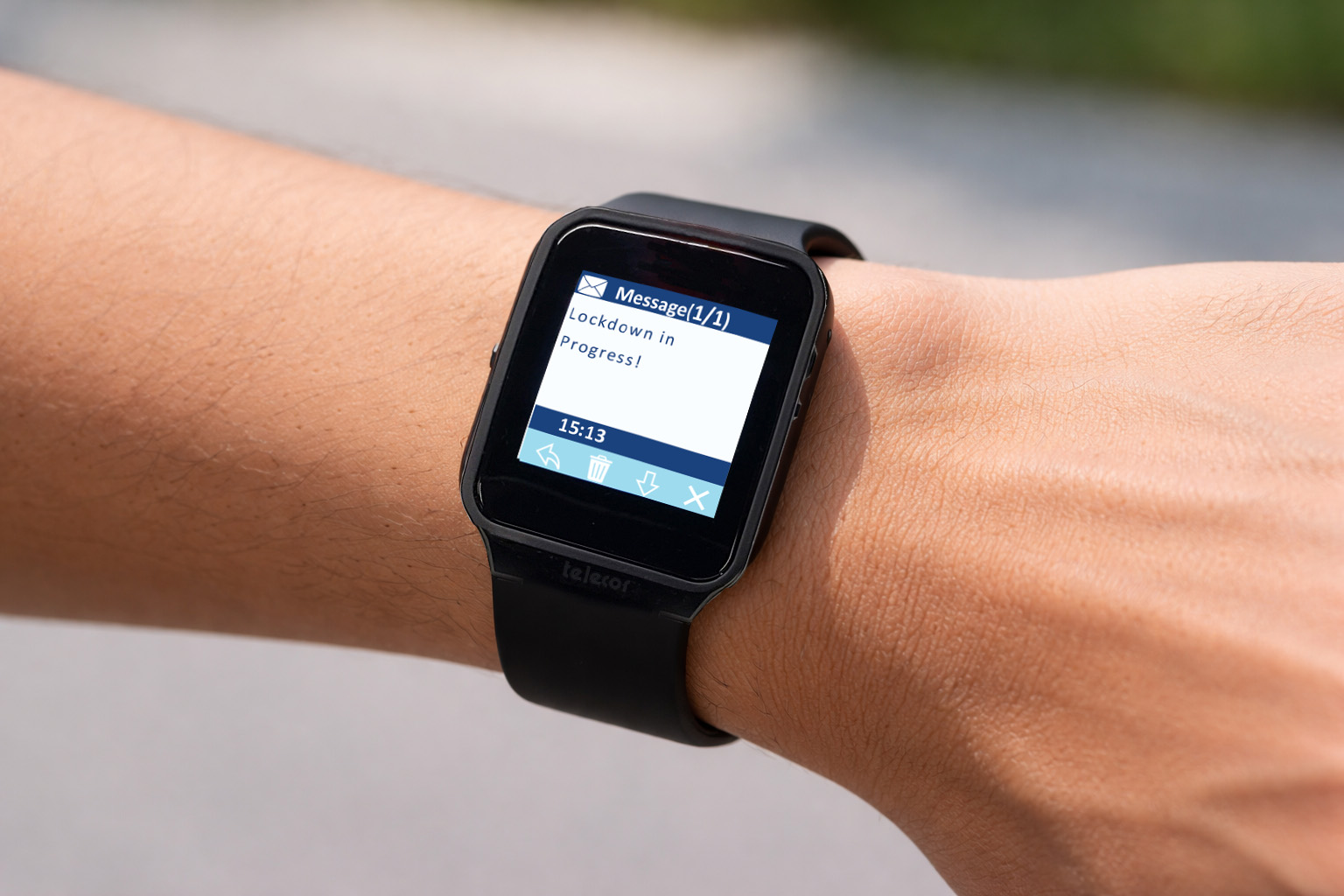
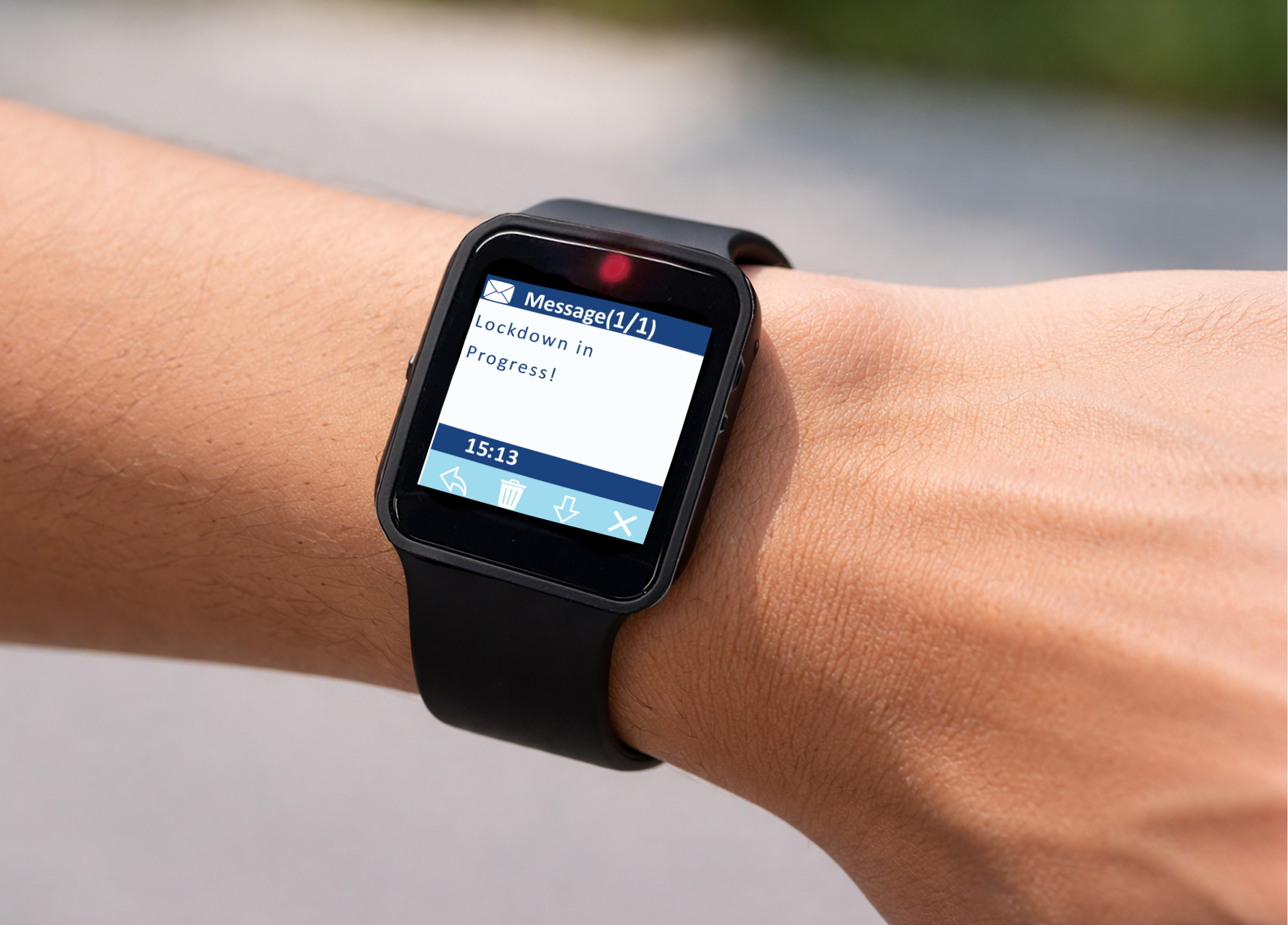
Telecor’s eWear Personal Notification Device delivers plain-text messages directly to the wrist using visual indicators, vibration and optional audible alerts. Messages are centrally managed and can be targeted to specific groups, while priority-based alerts distinguish routine communication from emergency, security and lockdown notifications. The system is also designed to maintain communication as wearers move throughout supported areas of a facility.
For an SRO, those capabilities create an important distinction. The law-enforcement radio can continue connecting the officer with dispatch, fellow officers, and first responders, while eWear provides another way for relevant information from the school’s communication environment to follow the officer across campus.
Rather than operating as another disconnected system, eWear can function as an endpoint within a broader communication environment. Telecor’s approach to centralized communication emphasizes synchronized, targeted messaging across multiple endpoints, allowing information to extend beyond a single speaker, display, or location.
The significance is the ability to extend an existing school communication environment closer to the people moving throughout the campus.
When the Message Has to Move
A real incident documented by NASRO demonstrates why both the reach and content of school communication matter.
Real-World Case Study
In 2013, a teacher at Chelsea Middle School in Alabama used a classroom intercom to report that a student had seen an armed man in a locker room. The information moved quickly, but one critical detail was missing: which locker room. SRO David Morrow and the school principal initially responded to the boys’ locker room before being directed to the correct location, where an armed individual was holding students hostage.
The incident demonstrates how speed, critical details, and reach intersect during an emergency – and how schools can strengthen communication through a layered approach that creates additional ways for information to reach the people responsible for acting on it.
Technology has continued to evolve since that incident, but the objective of effective school communication remains the same: ensure clear, actionable information reaches the right people, wherever they are.
Another Pathway When Seconds Matter
The value of that connection is most apparent when circumstances change quickly.
Consider a lockdown.
An SRO may already be somewhere else on campus when the lockdown is initiated. Administrators may be communicating from another location, teachers and students may be moving into established safety procedures, and law enforcement and school personnel may be coordinating different responsibilities.
The officer’s radio remains essential to law-enforcement communication. The school’s PA and mass-notification systems remain essential to communicating across the facility. Extending relevant school notifications to a device worn by the SRO creates another pathway for that information to reach the officer while they remain mobile.
A plain-text message on the wrist can reinforce audible communication with information the officer can see, while vibration provides another way to draw attention to the notification when noise, distance, or circumstances make sound alone less effective. Targeted messaging also allows information to reach specific groups rather than requiring every notification to go to every wearer.
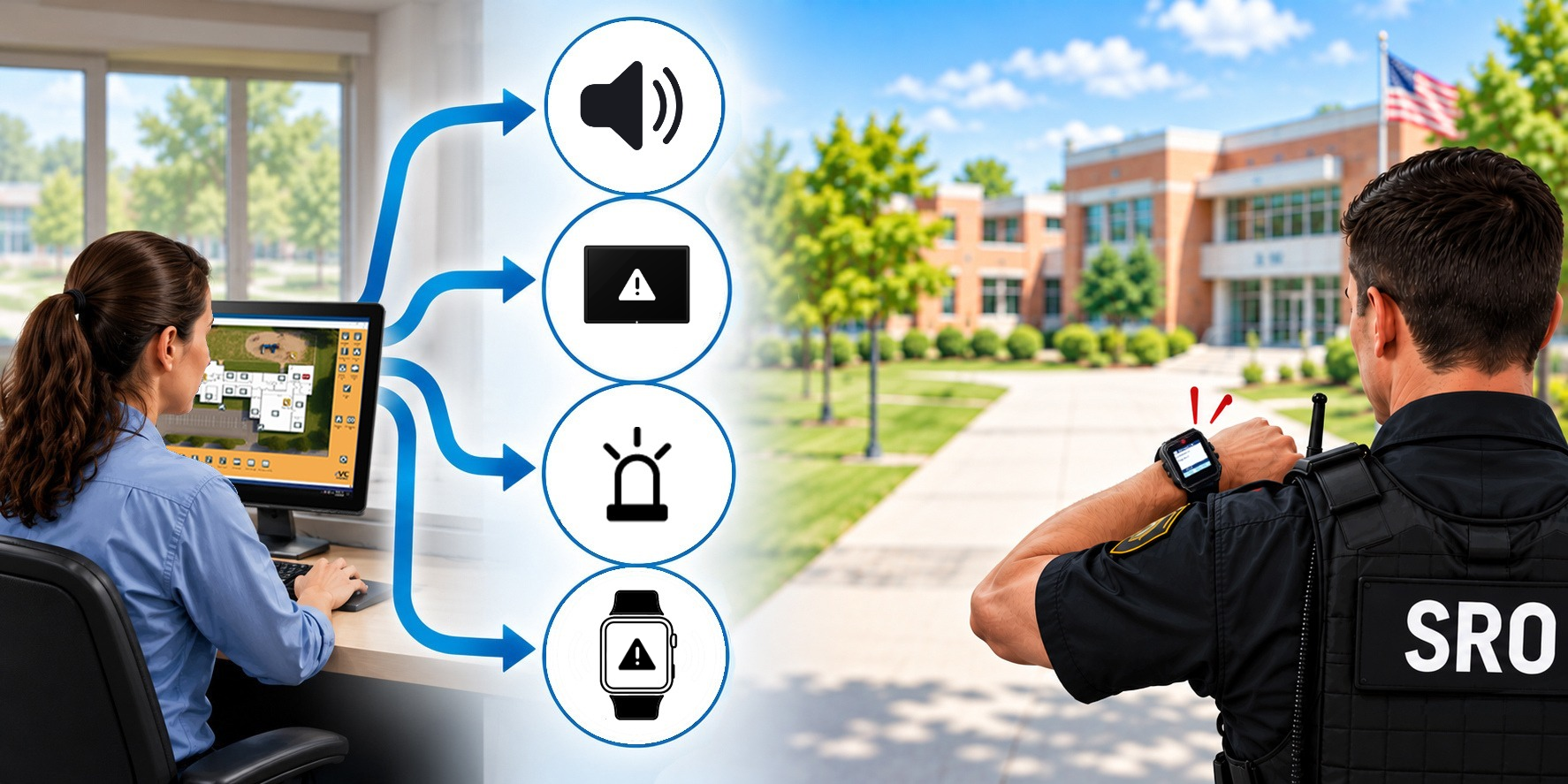
The same principle applies to a medical emergency, missing student, severe weather event, evacuation or other developing situation. The objective is not to determine whether the radio, PA system or wearable is the better communication tool. They serve different purposes. The opportunity is to connect those communication pathways so an important message has more than one way to reach the person responsible for acting on it.
Supporting the People Behind School Safety
Technology does not make a school prepared on its own. Preparedness depends on people understanding their responsibilities, practicing established procedures, and coordinating before an emergency occurs. School Resource Officers are one part of that larger community, working alongside administrators, educators, counselors, security personnel, and first responders.
For an SRO, effective communication involves more than the radio connecting the officer to law enforcement. It also requires considering how information originating within the school will reach an officer whose responsibilities may take them virtually anywhere on campus.
That is where eWear introduces a meaningful additional layer – the ability to bring the school’s communication environment with the officer, creating another way for the right message to reach the right person when it matters most.