
Redundant, multi‑channel communication is the only way to ensure critical alerts still reach people when one or more systems fail. The National Emergency Communications Plan (NECP) developed by the Cybersecurity & Infrastructure Security Agency (CISA) states:
“Resilient and redundant technology coupled with risk management are key to maintaining operations when technology fails, the unexpected happens, or natural and man-made disasters threaten to disrupt communications.”
The five physical layers of security recommended by Partner Alliance for Safer Schools (PASS) further emphasize a comprehensive series of overlapping physical and procedural layers that must work together to detect, delay and respond to potential dangers. This layered approach is a nationally recognized, evidence-based framework designed to help K-12 schools assess and improve their security. It operates on the principle that no single measure can stop every threat.
Real Time Communication Cannot Fail During a Crisis
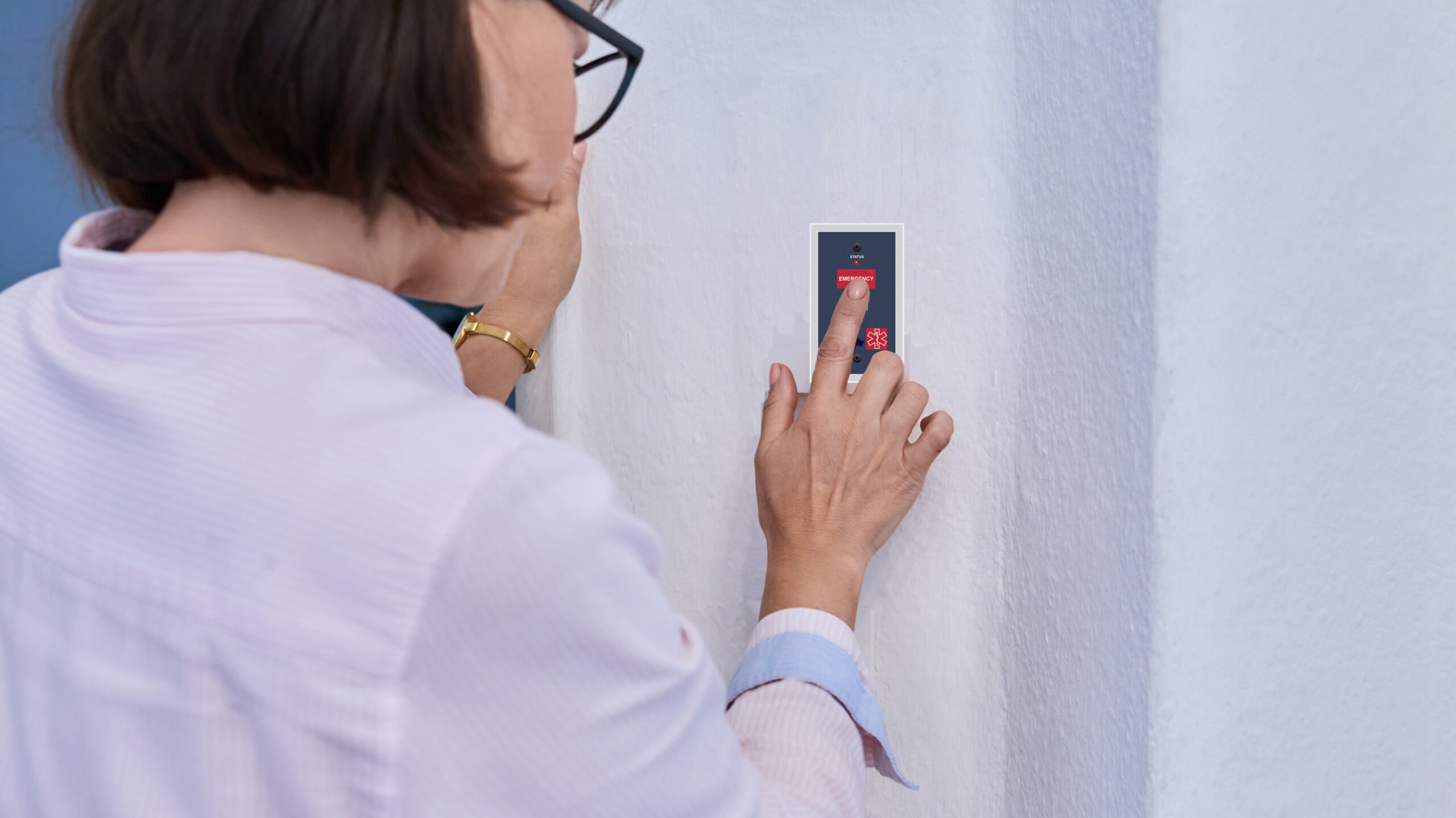
Issuing a call for help in any school or workplace should be seamless and easily executed from a nearby fixed location button, a virtual desktop icon, a wearable pendant or badge, or a mobile device. Within seconds, your security team should receive the message and react with a prepared response plan, locking down facilities and notifying every person in your care.
Relying on a singular alerting path to reach every individual may be problematic.
- What if an email doesn’t reach everyone because the Wi-Fi is spotty or the server freezes due to a sudden surge of outgoing messages?
- What if everyone in PE class is running laps with no phone, no laptop, and significant background noise?
- What if a hearing-impaired student steps out of class to use the restroom and does not hear or see the emergency message?
- What if a worker in a noisy loading zone of a manufacturing facility does not see or hear the emergency announcement?
- What if a cellular phone is uncharged or left in a purse, backpack or locker?
Redundancy Can Save The Day
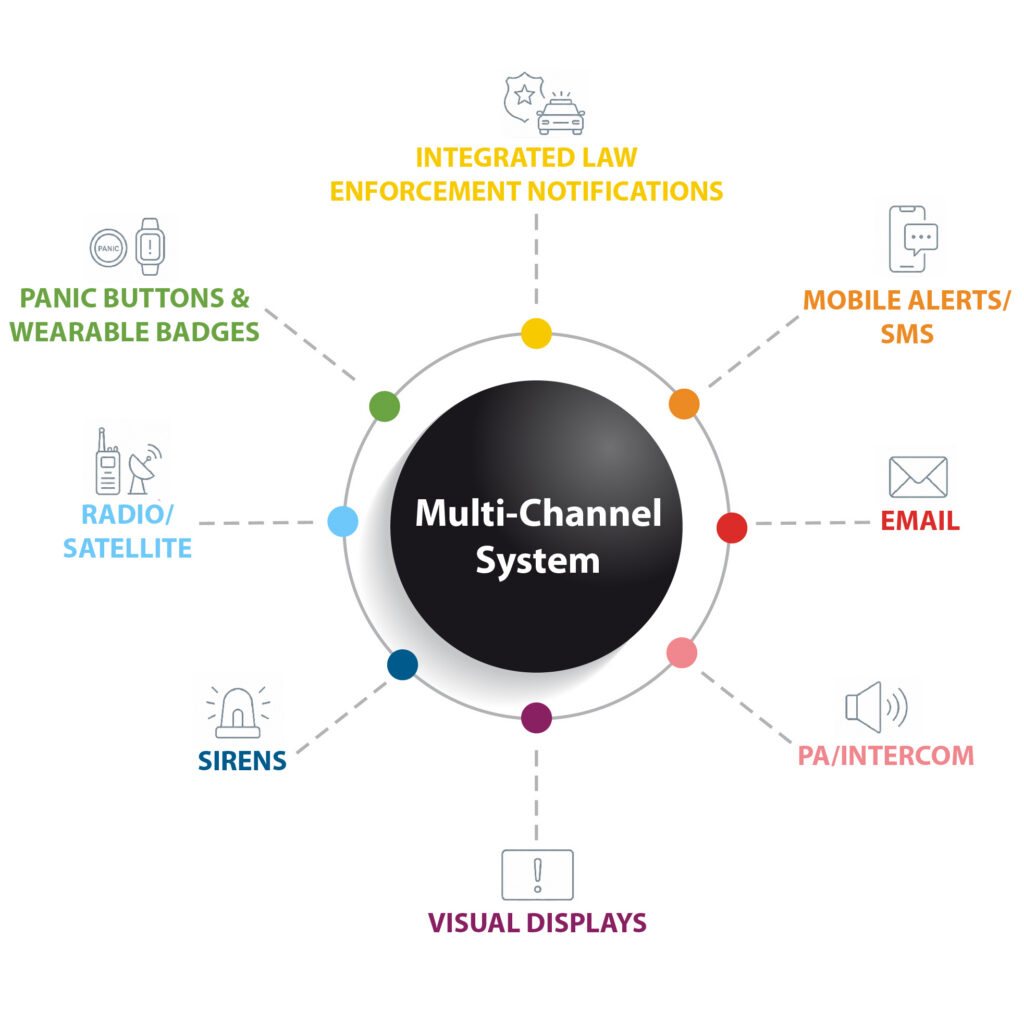
In schools and workplaces, some people are on phones, some on computers, some in hallways, and some are outdoors. Multi‑channel systems including PA, screens, mobile alerts, radios, sirens and badges ensure everyone receives the same message simultaneously. Redundant channels allow organizations to push accurate updates quickly and repeatedly, reducing confusion and unsafe behavior.
A robust system blends independent channels so that if one fails, others continue to function:
- Mobile alerts/SMS — fast but vulnerable to congestion
- Email — useful, but often inaccessible during outages
- PA/intercom — audible, but not always intelligible due to speaker placement and environmental noise
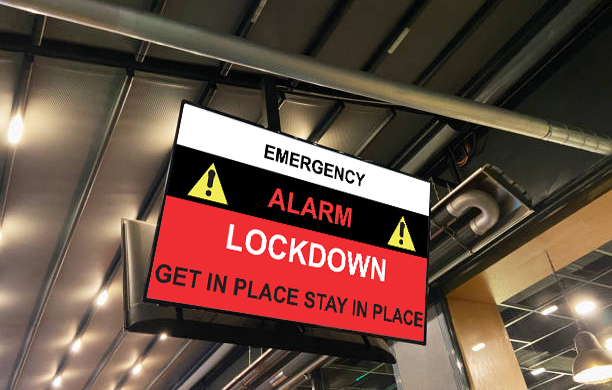
- Visual displays — essential for noisy areas and accessibly compliant
- Sirens — operate independent of digital networks
- Radio/satellite — critical when cellular and internet services fail
- Panic buttons and wearable badges — provide instant activation and staff‑level alerts
- Integrated law enforcement notifications — required in many states, including those with Alyssa’s Law legislation
Ensuring Accessibility Through Universal Design
At Telecor, we support all of the alerting channels above and ensure full integration with our Ethernet-based Public Address and Intercom solution.
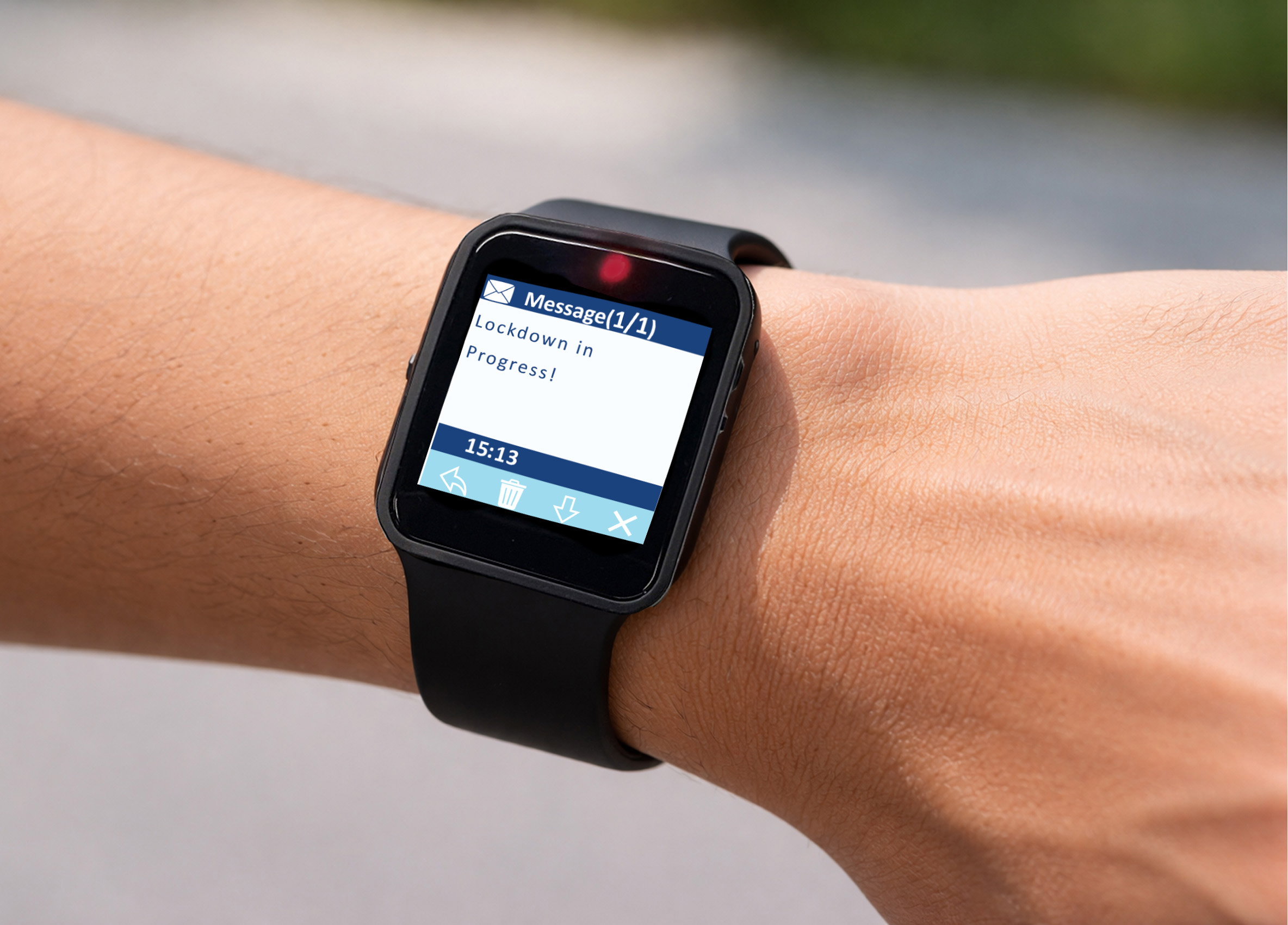
Our recent introduction of eWear Personal Notification Device adds a new layer of communication by providing alerts through vibration, visual indicators, and optional audible tones on a bright, easy-to-read, wearable display. By sending plain-text messages directly to the wearer’s wrist, eWear ensures both routine and emergency communications are received and seen – regardless of surrounding conditions.
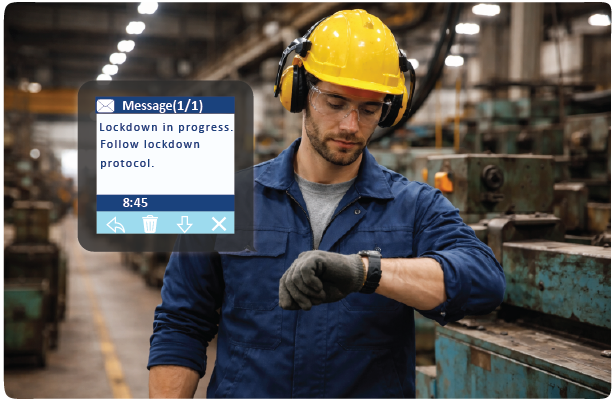
Built on universal design principles, eWear aligns with widely recognized safety and accessibility standards, including the Americans with Disabilities Act (ADA), National Electrical Manufacturers Association (NEMA), and Partner Alliance for Safer Schools (PASS) guidelines. By complementing traditional audio systems with visual and tactile alerts, eWear supports more inclusive communication practices across a wide range of environments.
We believe strength comes from diversity – not from relying on any one channel to carry the entire load. That’s the foundation of effective crisis communication. Not one perfect channel, but many reliable and inclusive ones. Not hoping the message gets through, but ensuring it does, even when networks fail, devices lose power, or people are far from their screens.
Redundancy Matters for Every School and Every Workplace
Crises and emergencies can be messy and unpredictable. Effective communication depends on reaching people where they are — not where we assume they’ll be.
Multi‑layered, messaging ensures:
- No single point of failure can jeopardize safety
- Accessibility is maintained for everyone
- Misinformation doesn’t fill the silence
- First responders get accurate, timely information
- Staff can act immediately without waiting for clarification
Redundancy buys time. Time buys safety. And safety is the one thing no organization can afford to gamble with.