Today’s organizations—whether a school district with 20 campuses, a retail brand with multiple stores, or a government agency with dispersed offices—operate in a risk environment that demands speed, consistency, and clarity. Emergencies unfold in seconds, not minutes, and stakeholders expect coordinated action across every location. That’s why centralized control of lockdowns, live paging, emergency messaging, and continuous supervision has shifted from a nice-to-have to a core operational requirement. It’s the backbone of modern safety infrastructure.
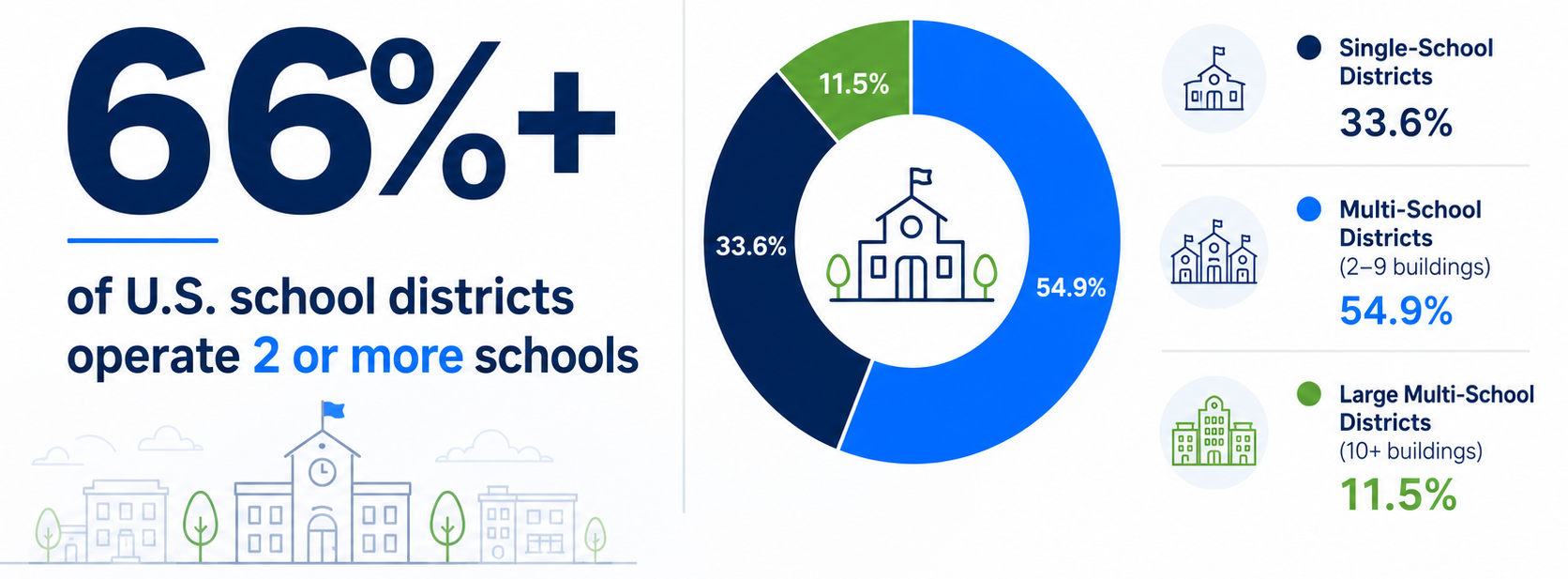
According to the National Education Association (NEA) Estimates of School Statistics, there are 16,026 total school districts in the U.S. for the 2025–2026 academic year, of which 15,813 are actively operating. While the precise building count for the 2026 academic year hasn’t been finalized, historical distribution models consistently break down as follows.
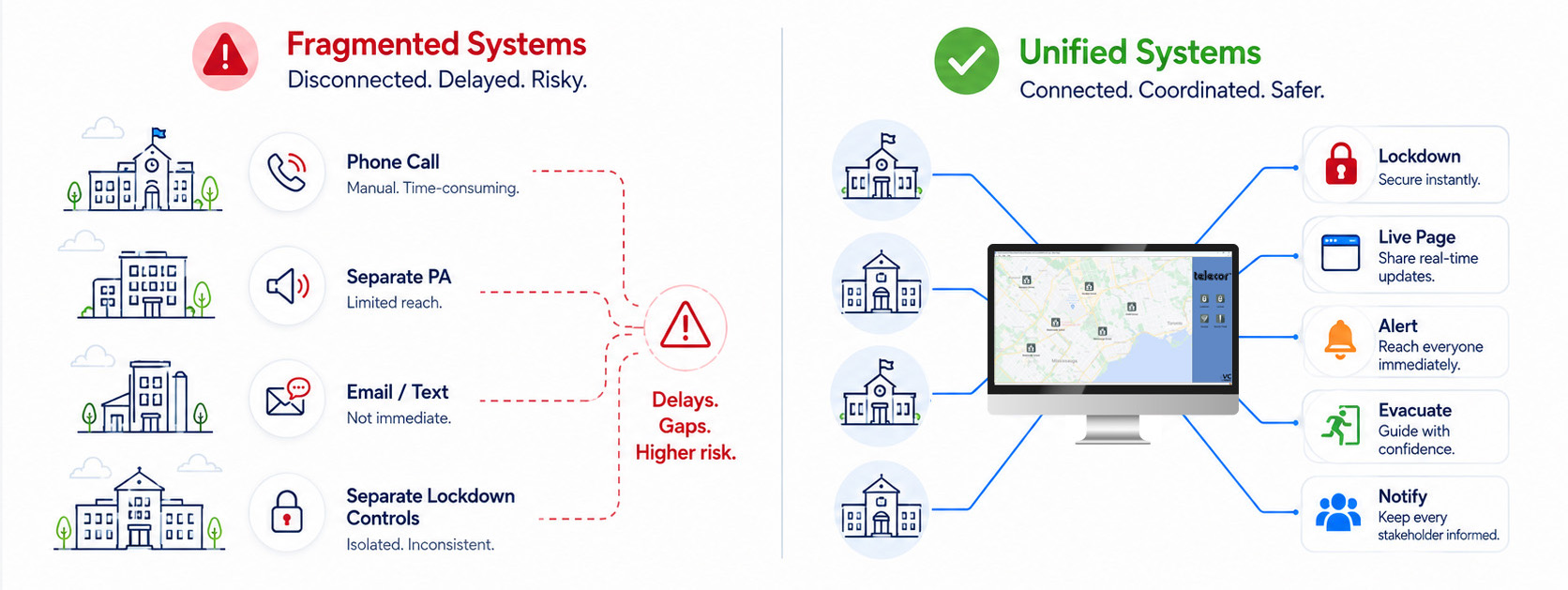
Fragmented Systems Slow Response; Unified Systems Accelerate It
Facilities Management Advisor reports that organizations operating across multiple buildings like schools, hospitals, or hotel properties face a simple reality: Fragmented communication creates risk. Disconnected paging, alerting, and access-control systems “often slow response times and create gaps in visibility,” while unified, centrally managed systems help organizations “act faster and more consistently when it matters most.”
The same source notes that centralized incident management systems allow one command to trigger lockdowns across multiple buildings, while simultaneously distributing instructions through phones, signage, PA systems, and mass notifications. This reduces uncertainty and enables faster decisions across campuses.
Situational Awareness, Response Speed, & Consistency Reduce Risk
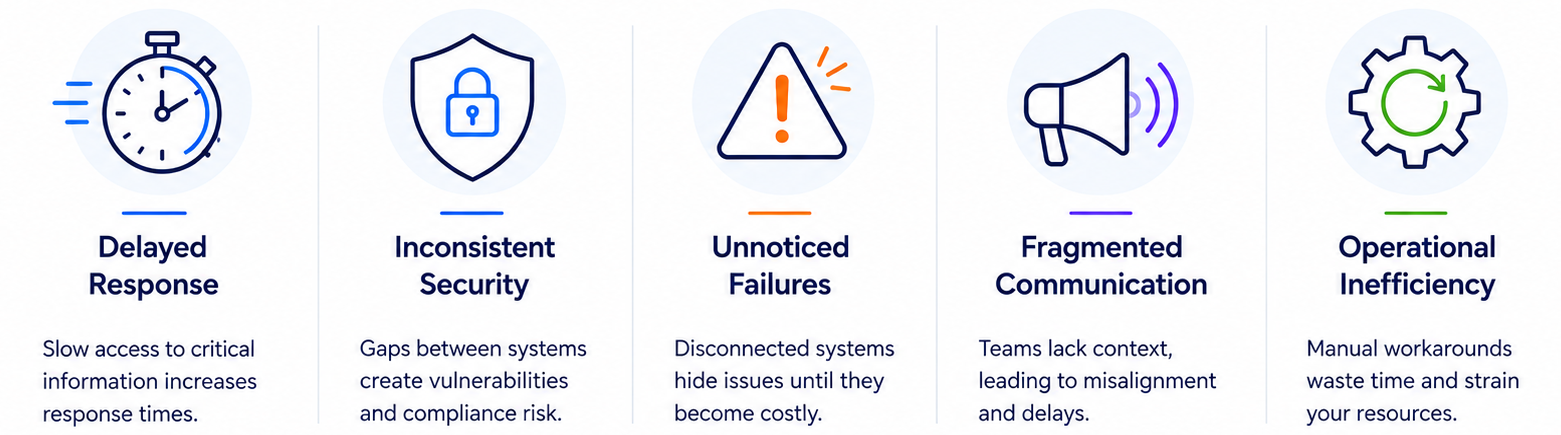
In a multi-site environment fragmentation isn’t just inconvenient; it creates blind spots that attackers, emergencies, and operational failures can exploit. Centralized management means you can monitor, communicate with, and coordinate seamlessly with those sites reducing the following risks.
- Delayed response during incidents – A security threat in 1 location may go un-noticed in another location; Emergency alerts like fire, weather, and lockdown take longer to propagate; Response teams can’t coordinate across sites.
- Insufficient security posture across buildings – Sites tend to follow their own security habits with siloed rules and emergency protocols and a security threat can thrive in inconsistency.
- Higher risk of unnoticed system failures – Without central monitoring, failures, outages, and offline issues can go undetected for days resulting in security breaches.
- No unified communication during emergencies – If you can’t broadcast instructions to all buildings at once you lose lockdown coordination, evacuation coordination, ability to confirm safety, and quick dissemination of emergency instructions.
- Operational inefficiency becomes a security vulnerability – Security and operations are intertwined. When staff must manually call, email, or text individual sites, response slows and errors multiply.
Telecor…Helping Your Entire Organization Stay Connected & Informed
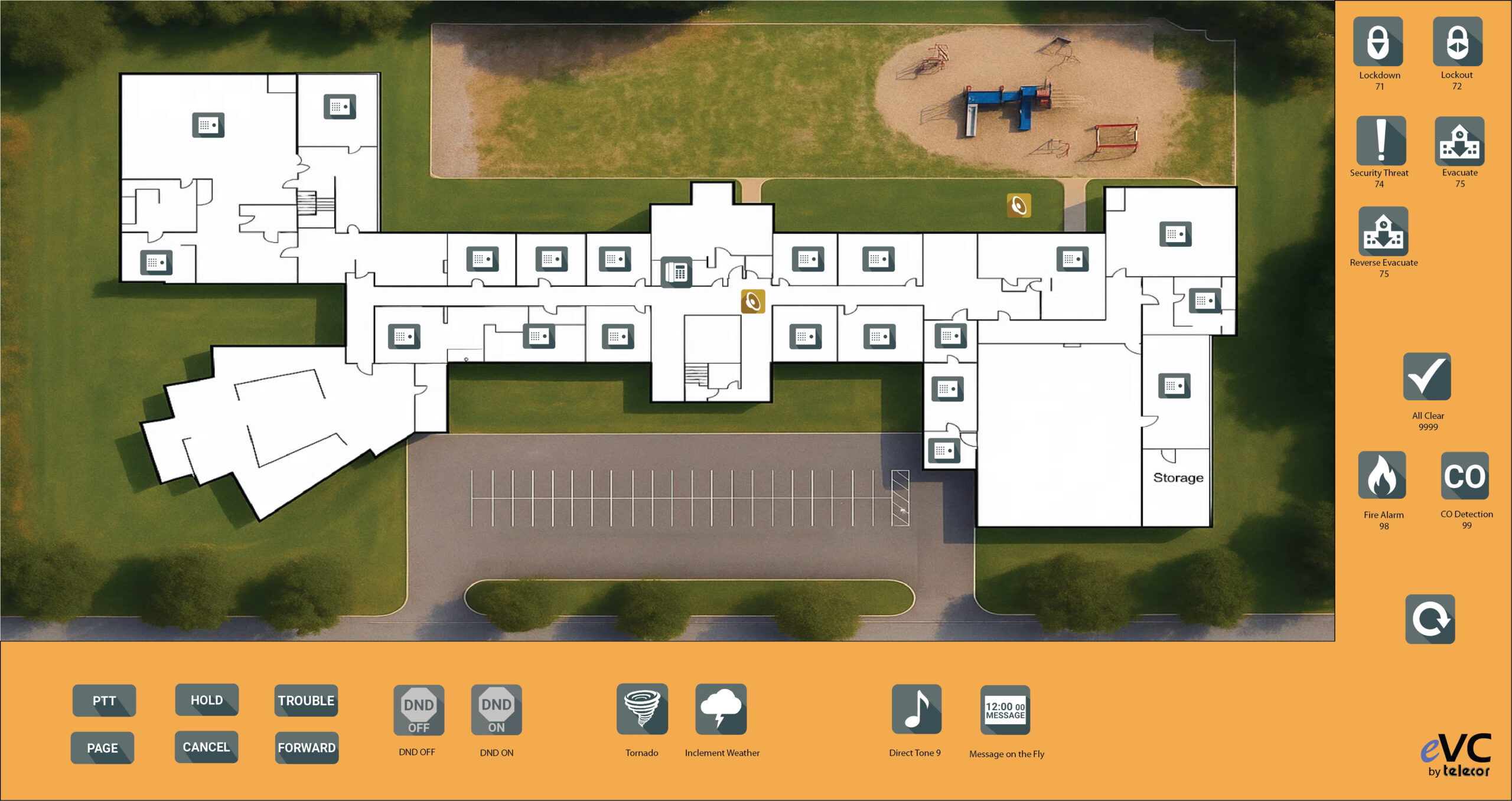
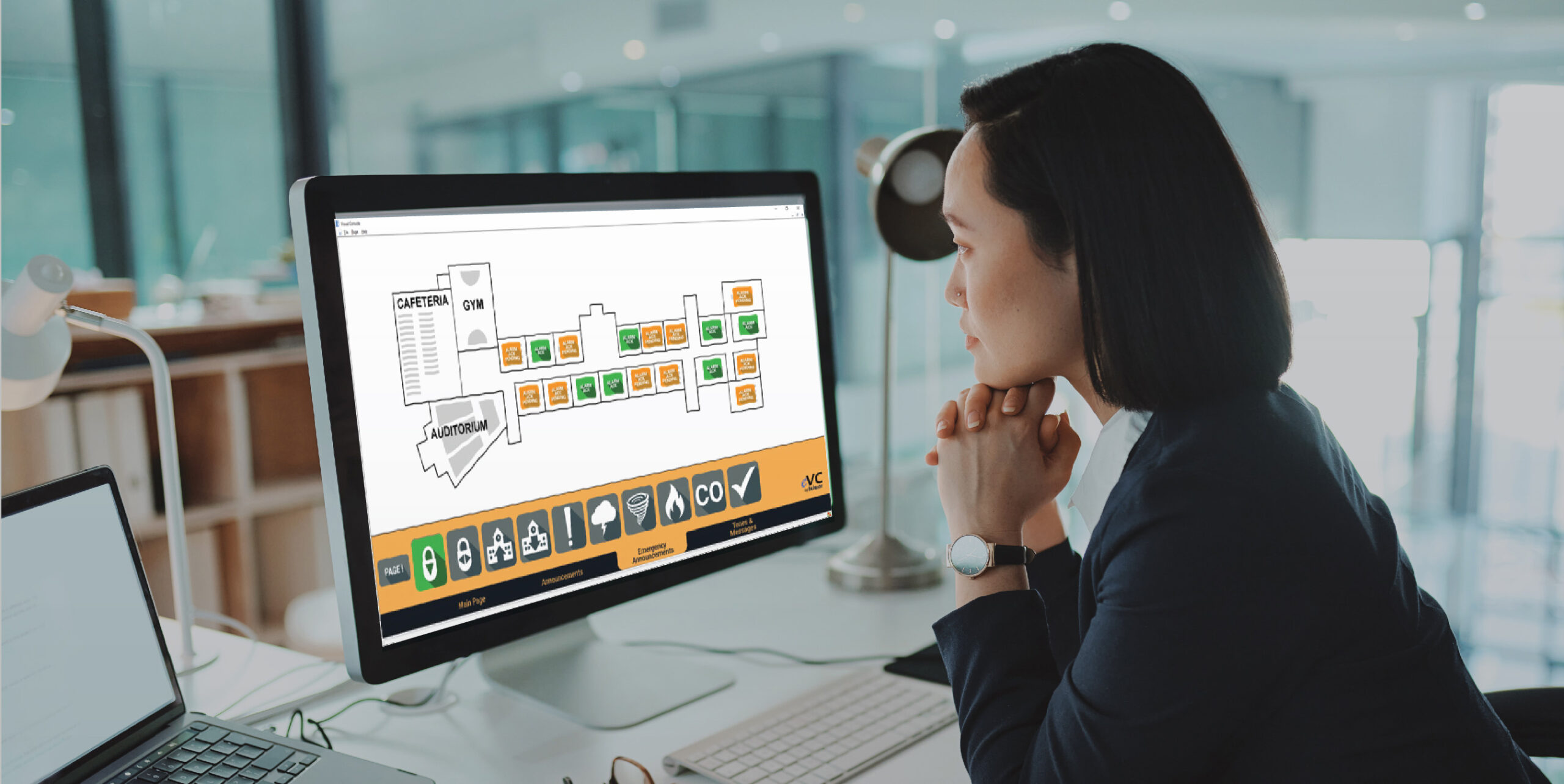
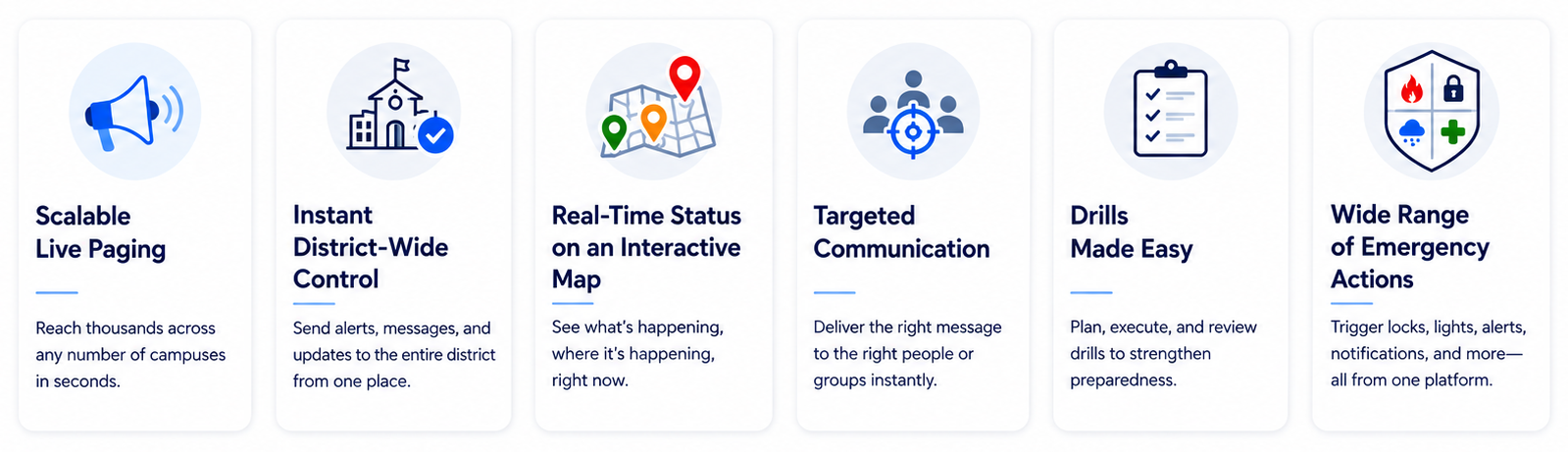
Telecor brings everything together through one unified, easy-to-use interface, allowing you to communicate across all facilities, activate emergency procedures, and monitor building status instantly. Whether it’s routine updates or urgent safety actions, our solutions are fast, reliable, and scale effortlessly as your organization grows – and without recurring fees:
- Scalable, Live Paging – Simultaneous live paging from a central location to one building, a group, or your entire district or campus.
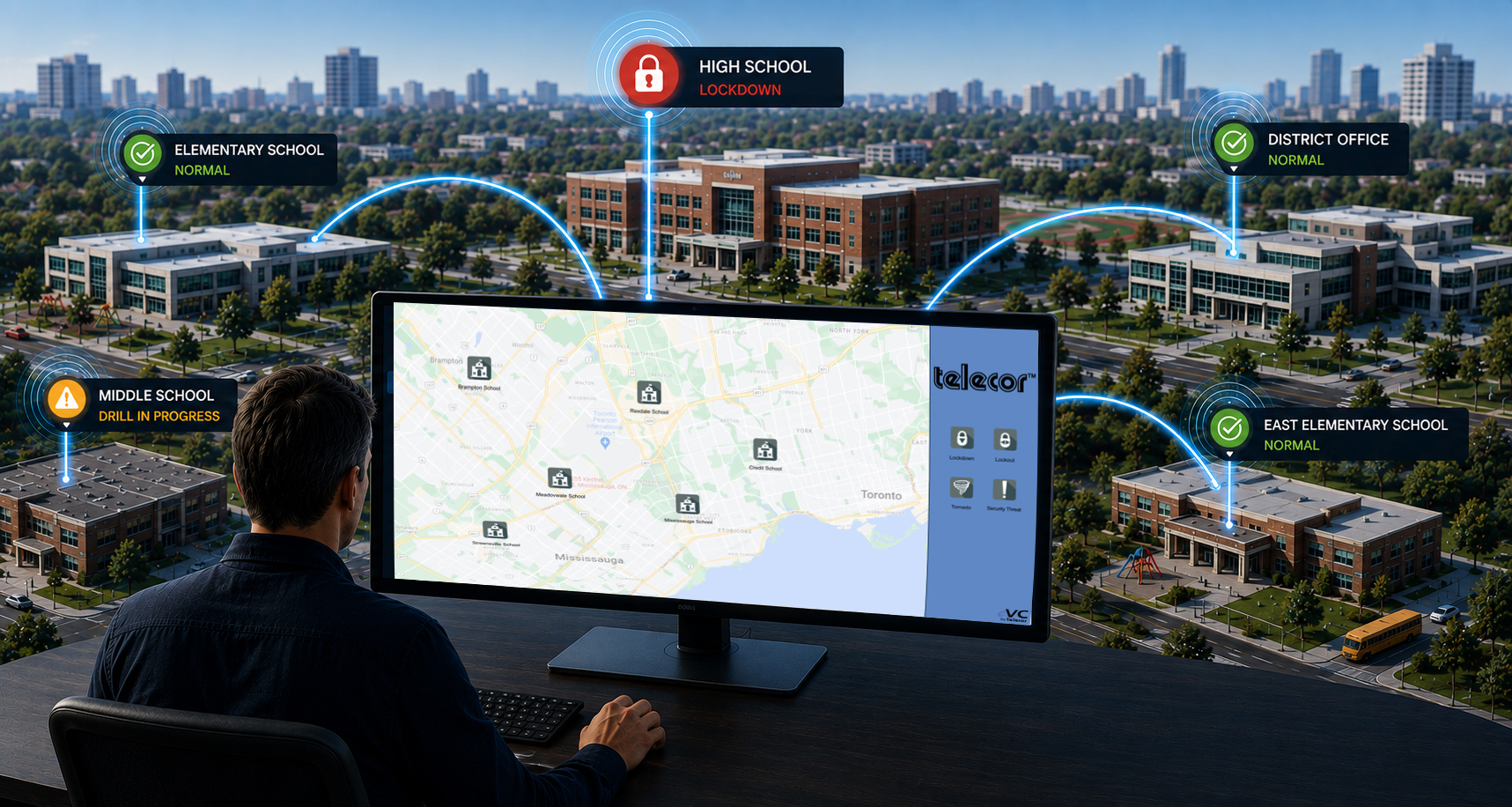
- Instant, District-Wide Control – Activate a lockdown or other emergency procedure at any facility or all facilities – with a single click.
- Real Time Status on an Interactive Map – Display each building as an icon that updates live.
- Targeted Communication for Any Situation – Send building-specific messages, group-based updates, district- or campus-wide notifications.
- Drills Made Easy -Run drills across one facility or multiple buildings – ensuring consistent training and compliance.
- Wide Range of Emergency Actions – staff can activate lockdown, lockout, evacuation, reverse evacuation, severe weather alerts and fire, and general emergency procedures individually or across a campus.
A Single, Reliable Point of Control
Centralized management of public address and mass notification ensures every building receives clear, synchronized, and immediate communication—eliminating gaps, reducing response time, and giving districts a single, reliable point of control during both everyday operations and critical emergencies.